


Egypt
Luxury Hotel Suites in Egypt
Egypt's luxury accommodation landscape is distributed across four distinct geographic zones, each with its own spatial logic and traveller profile. Understanding the differences between them is prerequisite to selecting a suite that aligns with the purpose of the visit.
- Al Ahram7 hotels
- Al Dabaa3 hotels
- Al Nozha2 hotels
- Al Qusir0 hotel
- Alexandrie1 hotel
- Assouan1 hotel
- Ataka3 hotels
- Dokki1 hotel
- Gizeh2 hotels
- Hurghada7 hotels
- Le Caire6 hotels
- Louxor2 hotels
- Marsa Alam3 hotels
- Mersa Matrouh3 hotels
- Misr El Kadima2 hotels
- Nasr City5 hotels
- Nouveau Caire8 hotels
- Port Safaga4 hotels
- Sharm El Shiekh1 hotel
- Shiekh Zayed1 hotel
- Ville du 6 Octobre13 hotels
- Zamalek6 hotels
Best Neighbourhoods and Regions for Luxury Suites in Egypt
Cairo — Garden City, Zamalek, and the Giza Plateau Corridor
Cairo's most prestigious addresses cluster in Garden City, the quiet residential district that borders the Nile's eastern bank south of Downtown. This neighbourhood retains a low-rise, tree-lined character that stands in contrast to the city's density elsewhere, and it hosts several of the capital's flagship international properties. Suite guests here gain proximity to the Egyptian Museum, the diplomatic quarter, and the river — an asset that becomes meaningful at the scale of a metropolis where travel distances matter.
Zamalek, the island district set in the middle of the Nile, offers a different register: residential, art-forward, quieter in pace. Properties here tend toward the boutique and the architecturally considered. The neighbourhood is walkable within its own boundaries and is home to galleries, embassies, and a long-standing expatriate community that has shaped its café and restaurant culture.
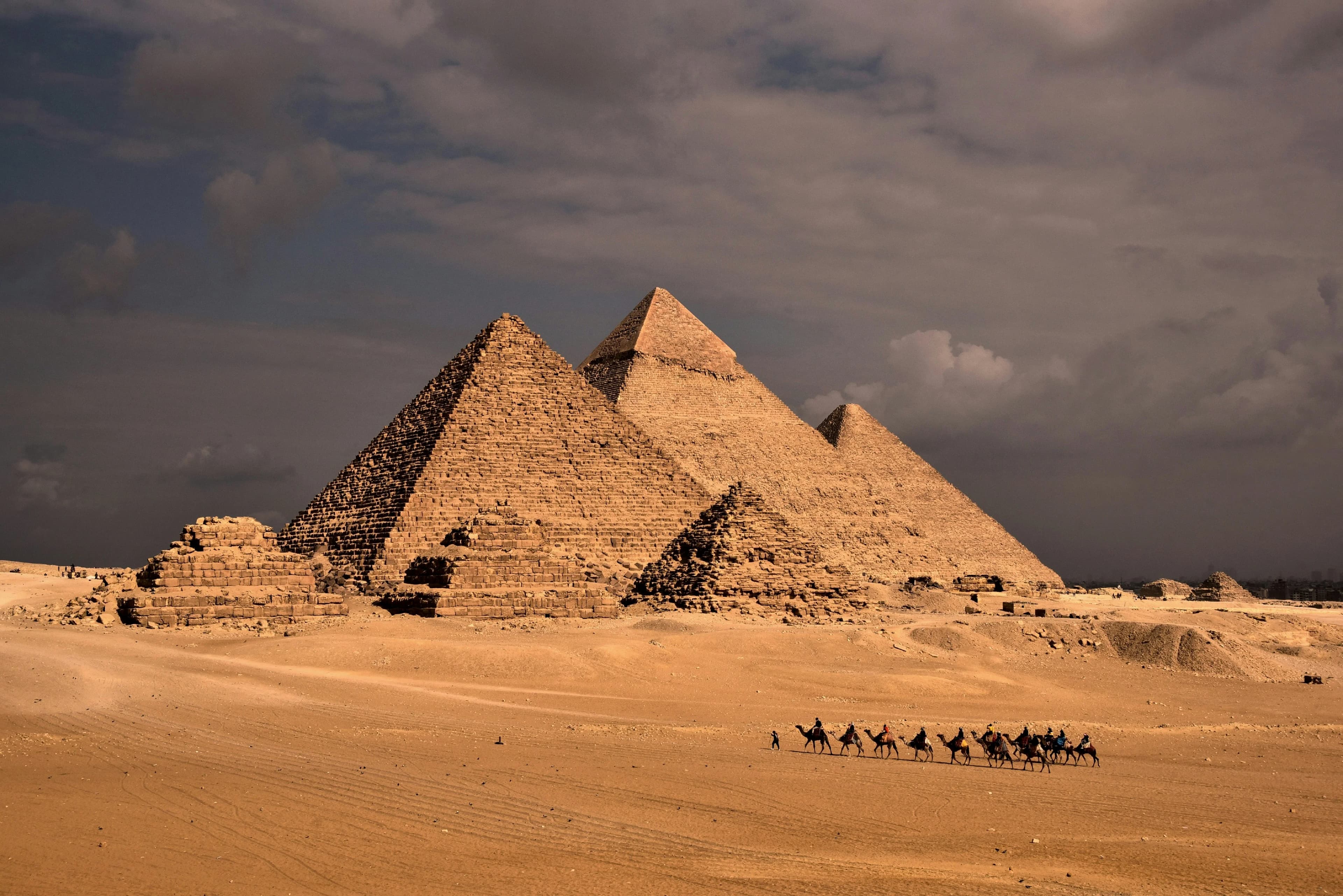
The Giza Plateau corridor — extending along the road toward the pyramids — positions guests for unmediated access to the Giza Necropolis. A small number of high-specification properties in this zone offer direct sightline views to the pyramids from suite terraces, a spatial condition that exists nowhere else on earth.
The Nile Valley — Luxor and Aswan
Upper Egypt's two principal heritage cities represent a different category of stay altogether. Luxor, built over and around ancient Thebes, contains the highest density of pharaonic monuments in the world. The East Bank holds the contemporary city and its commercial accommodation; the West Bank, more archaeological in texture, offers smaller properties embedded within the monument landscape. Suite selection here is closely tied to Nile-facing orientation — rooms with direct river views command a pronounced premium and provide a spatial counterpoint to the intensity of the site visits.
Aswan, further south, operates at a slower register. The city is architecturally less dense, and the Nile here is broader, framed by granite outcrops and the desert beyond. Elephantine Island and the western bank host the destination's most considered properties, several of which have operated as luxury landmarks for over a century. Aswan functions best as a terminus or a decompression point rather than a transit hub.
The Red Sea Coast — Hurghada, El Gouna, and the Sinai Peninsula
Egypt's Red Sea coastline runs for over 1,900 kilometres and hosts a layered hospitality infrastructure. El Gouna, a purpose-built lagoon town 65 kilometres north of Hurghada, stands apart from the resort corridor: architecturally coherent, car-light, and designed with a degree of urban intentionality uncommon in resort development. Properties here integrate into a system of canals and islands. The clientele tends toward European and design-aware.
The Sinai Peninsula — particularly the stretch between Sharm el-Sheikh and Dahab — offers a more elemental landscape: mountains meeting sea, minimal development in certain zones, and access to some of the world's most recognised dive sites. Suite offerings in Sharm el-Sheikh range from large-format resort compounds to smaller cliff-edge properties with direct Red Sea exposure.
When to Visit Egypt
Egypt's climate is among the most predictable of any major destination. The country receives minimal rainfall across most of its territory and operates on a single dominant seasonal variable: heat.
The optimal window for visiting Cairo, the Nile Valley, and the interior runs from October through April. Temperatures during this period are moderate — typically 20–28°C in Cairo, somewhat warmer in Luxor and Aswan — and daylight hours allow for comfortable extended engagement with outdoor sites. February and March offer particularly clear atmospheric conditions and lower humidity.
The summer months (June through September) push temperatures in Upper Egypt well above 40°C, which limits outdoor monument visits to early morning hours and modifies the logic of any Nile Valley itinerary. Properties during this period offer reduced rates and are less occupied, which can suit travellers who prioritise privacy and service ratio over climate.
The Red Sea coast operates on a different seasonal logic. Its water temperatures remain above 22°C year-round, and the diving and snorkelling calendar extends through all twelve months. The shoulder months of September–October and March–April provide the best balance of water conditions, air temperature, and manageable occupancy levels.
Key dates to note: Ramadan shifts annually with the Islamic calendar and affects operating hours in restaurants and public spaces. Eid al-Fitr and Eid al-Adha generate significant domestic travel, and properties in Cairo and coastal resorts fill accordingly. The Cairo International Film Festival (November) and the Abu Simbel Sun Festival (February and October, when the sun aligns with the sanctuary's interior) are events of note for itinerary planning.
Local Luxury Standards in Egypt
Egypt does not operate a government-administered prestige classification equivalent to France's Palace designation or the UK's Forbes Travel Guide. The formal classification system runs on a five-star scale administered by the Egyptian Hotel Association, but this framework is applied inconsistently and does not function as a reliable quality signal at the top of the market.
In practice, the local prestige hierarchy is determined by brand affiliation, property age and heritage, and the quality of the physical plant. A small number of properties — several in Cairo, two or three in Aswan — carry genuine historical significance: they operated during the colonial and mid-century eras as the reference points for international travel in the region, and their continued operation as luxury assets gives them a provenance that newer builds cannot replicate.
International operators dominate the five-star segment across Cairo, Hurghada, and Sharm el-Sheikh. A growing number of independent and design-led properties have emerged in Luxor, Aswan, and El Gouna, operating outside the global chain infrastructure and offering a more architecturally specific experience. These properties tend to have smaller room counts, more attentive service ratios, and stronger relationships with local cultural institutions.
The term 'heritage property' is used informally within Egypt's hospitality sector to identify hotels with pre-1970s operational histories, though the designation carries no regulatory weight.
How to Choose the Best Suite in Egypt
Suite selection in Egypt is primarily a question of orientation and context. Unlike destinations where suite quality is largely uniform across a city's flagship properties, Egypt's geography introduces meaningful asymmetries: a suite on the wrong side of a Nile-facing property loses the defining spatial quality of the stay; a pyramids-view suite in Giza is categorically different from one that does not have that sightline.
For Cairo, the key variables are Nile exposure, floor height (which determines both the quality of the view and the level of ambient sound isolation), and access to a usable private terrace. The city is large and traffic-dense; proximity to the sites relevant to the visit — whether the Egyptian Museum, Islamic Cairo, or the pyramids — should factor into property selection alongside the suite specification itself.
For Nile Valley properties in Luxor and Aswan, confirm the suite's orientation before booking. River-facing rooms are not universal, and properties sometimes classify interior-facing or garden-facing rooms within their premium tier. The operational quality of the private terrace or balcony — its size, privacy, and shading — matters considerably given the amount of time guests typically spend outdoors at these destinations.
For Red Sea properties, the relevant parameters are reef access (whether the property has a private jetty or direct beach entry to the reef, versus a sandy beach), water sports infrastructure, and the scale of the compound. Larger resort formats can compromise the service quality that defines a suite-tier experience; smaller properties with limited room counts tend to maintain higher staff-to-guest ratios.
The Value of a Curated Selection in Egypt
Egypt lists several thousand accommodations at the five-star category level across its hotel classification system. The distance between the upper and lower end of that designation is substantial — arguably greater than in markets with more rigorous certification. For a traveller arriving at this destination for a specific purpose — a Nile cruise connection, a Red Sea diving week, a heritage circuit of the monuments — the cost of a misaligned property choice is not abstract. It affects the quality of sleep before early-morning site access, the practicality of the surrounding neighbourhood, and the coherence of the overall itinerary.
La Suite's selection of 55 properties across Egypt applies a consistent evaluation framework: suite architecture and finish quality, service infrastructure, locational logic, and the presence of distinguishing spatial features. The selection excludes properties that perform at a category level below what the suite designation warrants, regardless of star rating or brand recognition. The result is a set of options where each entry has been assessed on the same terms, reducing the research burden for travellers who require precision rather than volume.
Frequently Asked Questions About Luxury Suites in Egypt
What is the best area in Cairo to stay in a luxury suite?
Garden City and Zamalek are Cairo's two most established luxury residential and hotel districts. Garden City offers Nile proximity and diplomatic-quarter quiet; Zamalek offers island character and walkability within its own boundaries.
Which Egyptian city offers the most architecturally distinctive suite experiences?
Aswan stands out for a small number of properties with genuine heritage depth and direct Nile exposure in a less urbanised setting. Several properties there have operated as international luxury reference points since the early twentieth century.