


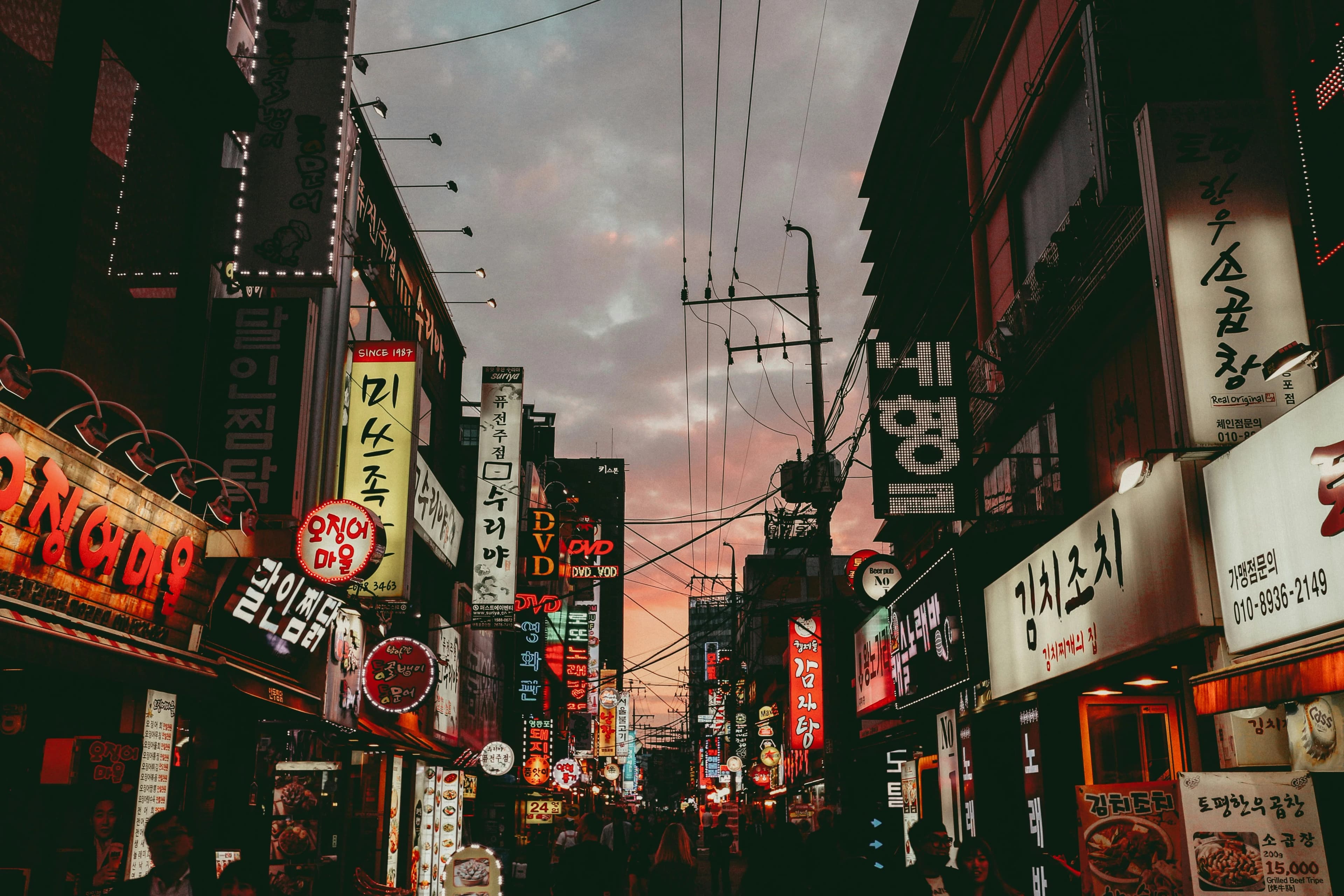
South Korea
Best Hotel Suites in South Korea
Understanding South Korea's geography of prestige is essential before selecting a suite. The country's luxury hospitality offer is concentrated in distinct urban and resort zones, each with its own architectural character and guest typology.
Best Neighbourhoods for Luxury Hotel Suites in South Korea
Gangnam and Yeouido, Seoul
Gangnam remains the financial and commercial centre of Seoul, and its hotel stock reflects that function — high-rise towers with floor-to-ceiling glass, corporate-grade amenity infrastructure, and suites designed for extended stays. Yeouido, Seoul's financial island district, follows a similar logic. These areas serve guests whose primary orientation is business or proximity to South Korea's major corporate headquarters, with leisure as a secondary consideration. Suite sizes here tend toward generosity in square footage, with views across the Han River or the cityscape forming the primary spatial statement.
Jongno and Central Seoul
North of the Han River, the historic centre of Seoul — encompassing Jongno, Insadong, and the area surrounding Gyeongbokgung Palace — houses a different category of property. Here, the most architecturally considered hotels in the country operate, often integrating Joseon-era aesthetic references into contemporary spatial frameworks. Suites in this zone command attention for their material selections: lacquered surfaces, natural stone, hanji-influenced textiles, and the deliberate minimalism that characterises Korean high design. Proximity to Bukchon Hanok Village and the major palace complexes gives this district a cultural density that Gangnam does not replicate.
Itaewon and Hannam-dong
Itaewon's northern hillside, merging into Hannam-dong, has evolved into Seoul's most design-literate residential and hospitality quarter. The properties here are smaller, more independent in sensibility, and attract a guest who prioritises aesthetic coherence over brand recognition. Interiors draw from both international modernism and Korean craft traditions. The elevated topography provides suite views that differ markedly from the flatness of Gangnam — layered, residential, and more intimate.
Jeju Island
Jeju operates as South Korea's primary resort destination — a UNESCO-designated volcanic island with a distinct ecology and architecture. Luxury properties here are almost universally low-rise, integrating with the basalt landscape rather than dominating it. Suite typologies shift accordingly: private garden access, outdoor bathing, and direct proximity to the island's coastline or interior highland terrain define the offer. Jeju's luxury hospitality standard has risen considerably, with several properties now benchmarking against the finest resort product in East Asia.
Busan
South Korea's second city has developed a credible luxury hotel offer, concentrated in Haeundae and Centum City. Haeundae's beachfront provides the only urban beach suite experience in the country, and the scale of hotels here reflects Busan's ambition as a MICE and leisure destination. The aesthetic is modern and coastal rather than culturally referential, appealing to guests who want a counterpoint to Seoul's density.
When to Visit South Korea for a Suite Stay
South Korea has four distinct seasons, each with legitimate claims on traveller preference. The selection of timing materially affects the experience of both the city and the suite.
Spring: March to May
Spring is the most internationally recognised season for Seoul and the wider country. Cherry blossom flowering, typically concentrated in the first two weeks of April, draws significant domestic and international travel. Properties in Jongno and around Changdeokgung Palace are positioned directly within the bloom corridor. Demand spikes sharply during peak blossom weeks, and suite availability at the most sought-after addresses tightens early. Temperatures are moderate — between 10°C and 18°C — making this the most comfortable season for extended city movement.
Autumn: September to November
Autumn rivals spring in quality of light and temperature, with the additional visual register of foliage across the mountain precincts. October is particularly well regarded — clear skies, low humidity, and foliage at peak colour across the national park zones adjacent to Jeju and Seoul. Busan in autumn benefits from the Busan International Film Festival (BIFF), held in October, which occupies Centum City and brings an international creative audience. This is arguably the most resolved season for combining urban and natural suite experiences across the country.
Summer: June to August
Summer brings high humidity and frequent rainfall during the monsoon period (late June to mid-July). Jeju, however, operates differently in summer — the island's resort properties reach their operational peak, and coastal suite access becomes the primary draw. Seoul summer has its own energy, with temperatures reaching 33°C and a domestic luxury travel market that maintains hotel occupancy. Guests sensitive to humidity and heat should adjust expectations accordingly.
Winter: December to February
Winter in Seoul is cold and dry, with temperatures dropping below freezing. Ski resorts in Gangwon Province — within two hours of Seoul — activate, and the country's most architecturally dramatic mountain properties come into demand. Suite rates in Seoul city properties often represent the lowest of the year in winter, offering value access to rooms that command significant premiums in spring and autumn.
Understanding South Korea's Luxury Hotel Classification Standards
South Korea does not operate a Palace classification equivalent to France's Palaces designation. The primary official classification is the Korea Tourism Organization (KTO) star system, with five stars representing the highest formal tier. Within this five-star category, however, there is a meaningful spectrum — from internationally branded luxury towers to independent properties with genuine design ambition.
Several global luxury brands operate flagship properties in Seoul, including addresses associated with the Banyan Tree, Four Seasons, Shilla, and Lotte portfolios. The Shilla is specifically notable as a Korean-origin luxury brand that has developed significant cultural equity. The Hotel Shilla Seoul, opened in 1979 and comprehensively repositioned since, carries a domestic prestige that is difficult for international brands to replicate.
Boutique and design-led properties fall outside straightforward classification hierarchies. In Jongno and Hannam-dong particularly, smaller properties operate to a standard of material and spatial quality that exceeds their star count would suggest. La Suite's curation addresses this gap — selecting on evidence of suite quality rather than classification tier alone.
How to Choose the Right Suite in South Korea
Several practical considerations should govern suite selection in South Korea specifically.
Define the primary orientation: urban or resort
South Korea's luxury suite offer bifurcates cleanly between urban properties (Seoul, Busan) and resort properties (Jeju, coastal areas). These are not interchangeable experiences. A guest seeking cultural immersion and architectural precision will find Seoul's Jongno district more rewarding than Jeju. A guest prioritising spatial generosity, natural setting, and outdoor bathing will find Jeju's resort properties more appropriate. Attempting to optimise both within a single stay is possible — Seoul and Jeju are connected by frequent one-hour flights — and multi-destination itineraries are common among international visitors.
Assess suite floor and view orientation
In Seoul's high-rise properties, suite floor and view orientation are significant differentiators. North-facing rooms in central Seoul offer palace and mountain views; south-facing rooms typically present the urban commercial sprawl. In Jeju, ground-level suites with private garden access are generally preferred over upper-floor rooms, reversing the logic of city properties.
Consider cultural programming
Several Seoul properties offer in-suite or on-property Korean cultural programming — tea ceremony access, hanbok fitting, calligraphy, or Korean bath rituals (jjimjilbang-derived spa treatments). For internationally travelling guests, these offerings add contextual depth that differentiates a stay from a generic luxury hotel experience.
Why Curation Matters for South Korea Suite Selection
South Korea's five-star hotel count has expanded significantly over the past decade, and the gap in quality between the most and least considered properties within the five-star tier is wide. Marketing materials and brand reputation do not reliably predict the actual suite experience. La Suite's selection of 58 properties across South Korea isolates those addresses where the suite offering — in terms of spatial design, material quality, service infrastructure, and view — has been assessed against consistent criteria. For a traveller spending limited time in the country, the cost of a suboptimal selection is disproportionate. Curation compresses the research burden and eliminates the noise of volume-based listing platforms.
Frequently Asked Questions: Luxury Hotel Suites in South Korea
What is the best area in Seoul for a luxury suite?
For guests prioritising cultural depth and architectural quality, the Jongno and central Seoul area offers the most considered properties. For business travellers or those seeking proximity to commercial districts, Gangnam provides large-format luxury towers with comprehensive amenity infrastructure.
Is Jeju Island worth visiting for a luxury suite stay?
Jeju has developed into one of East Asia's most credible resort destinations, with low-rise properties integrating basalt landscape, private outdoor bathing, and coastal access. It functions as a strong counterpoint to Seoul's urban density and is accessible via frequent one-hour domestic flights.