


Philippines
Best Hotel Suites in the Philippines
The Philippines does not function as a single destination. Choosing where to stay is, in practice, choosing between fundamentally different experiences of luxury — urban or ecological, connected or isolated, architectural or elemental.
Best Neighbourhoods and Areas to Stay in the Philippines
Makati and BGC, Manila
Metro Manila's two premium business districts operate at a standard comparable to Singapore or Hong Kong at the upper tier. Makati is the older financial centre, with a denser, more layered urban fabric and a concentration of the country's most established luxury hotels. Bonifacio Global City (BGC), adjacent to Makati, is the more recently developed district — wider streets, purpose-built towers, and a retail and arts infrastructure designed from the outset for international standards. Both districts offer suite-level accommodation with city skyline positioning, proximity to Ayala and Rockwell dining circuits, and access to the international airport within 30 to 45 minutes depending on traffic.
Palawan
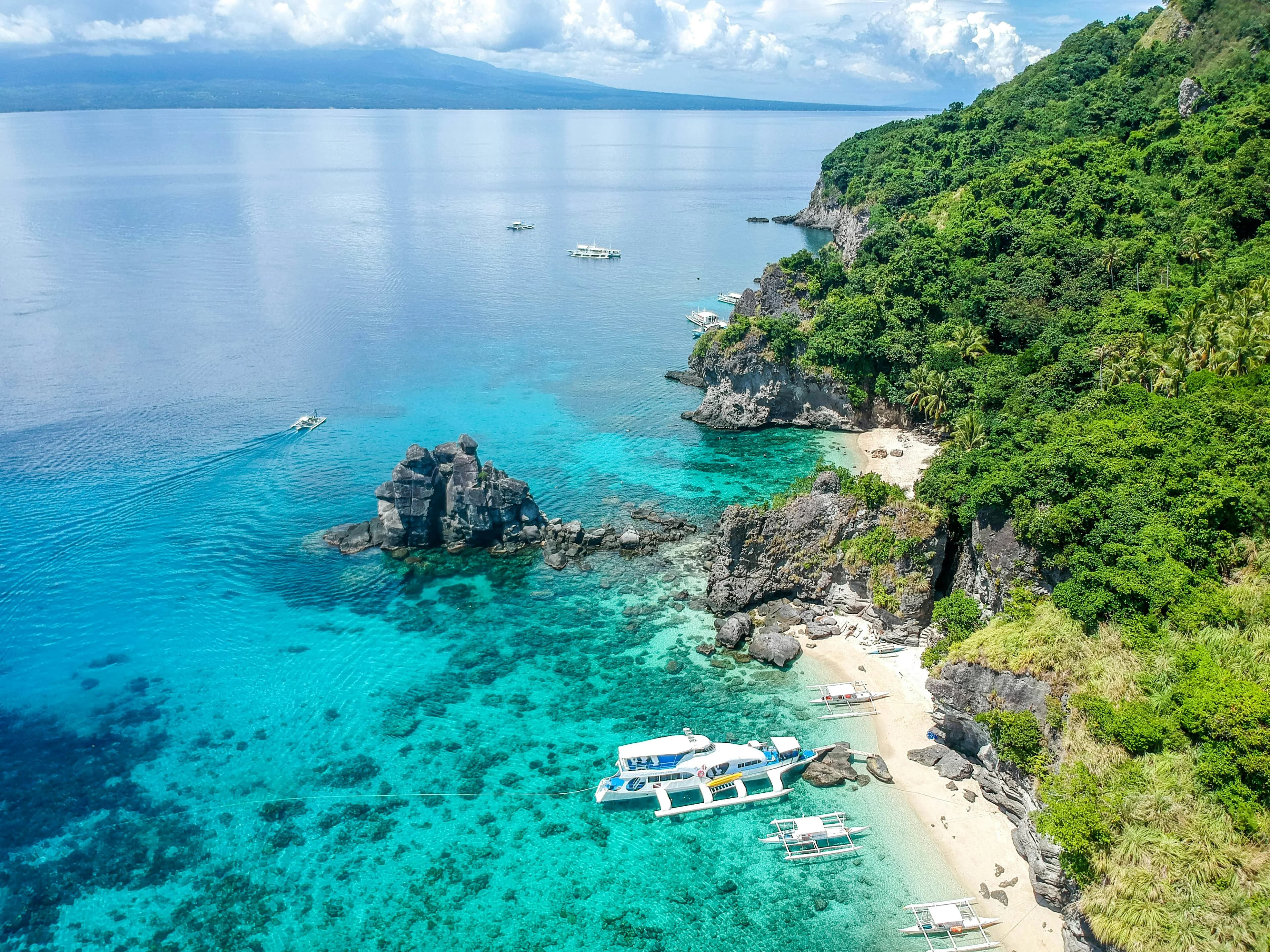
Palawan is the reference point for high-isolation luxury in the Philippines. The island province, running along the western edge of the archipelago, contains the Tubbataha Reef Natural Park and the Puerto Princesa Subterranean River — both UNESCO World Heritage Sites — and has long attracted properties that use ecological positioning as a design principle. El Nido and Coron are the two primary clusters for ultra-luxury resorts, both characterized by limestone karst formations, private beaches, and boat-access-only properties that enforce a natural separation from mass tourism. The design language here tends toward exposed natural materials, open-air architecture, and minimal visual interference with the surrounding environment.
Cebu
Cebu functions as the secondary urban anchor of the Philippines and the primary gateway to the Visayas region. Cebu City offers a more compact version of Manila's business hotel infrastructure, while the mactan island coast — reachable by a short bridge — concentrates the region's beachfront resort supply. Cebu is also a practical base for island-hopping within the Visayas, with connections to Bohol, Camotes, and the thresher shark dive sites of Malapascua. Suite-level options here tend to combine beach frontage with operational efficiency — a combination the Palawan properties often trade for deeper isolation.
Siargao
Siargao has undergone a significant requalification over the past decade, transitioning from a surf-culture enclave to a destination capable of supporting boutique luxury at a meaningful level. The island remains deliberately low-density, with restrictions that have slowed large-scale hotel development. The best properties here occupy private land with access to reef breaks and mangrove estuaries, operating with a level of architectural restraint that appeals to a design-literate traveler who prioritizes setting over amenity volume.
Boracay
Boracay occupies a contested position in the Philippines luxury market. Following its enforced closure and rehabilitation in 2018, the island has re-opened with stricter environmental controls and a reduced hotel footprint. White Beach remains one of the most recognized fine-sand coastlines in Southeast Asia by international standards. The premium end of Boracay's accommodation supply has improved materially since rehabilitation, though the island's scale means genuine seclusion requires deliberate property selection.
When to Visit the Philippines
The Philippines follows a tropical climate pattern with regional variation. The dry season (amihan) runs broadly from November through April, with the coolest and driest conditions concentrated between December and February. This is the primary window for Palawan and the Visayas — water visibility for diving reaches its annual peak, boat transfers operate reliably, and outdoor architectural elements of open-plan resorts can be used without interruption.
The wet season (habagat) runs from June through October, bringing southwest monsoon rains and the typhoon season that most affects the eastern seaboard, including Samar, Eastern Leyte, and portions of Mindanao. Siargao's surf season peaks during this period — September and October deliver the most consistent swells at Cloud 9 and surrounding breaks. Manila's weather is less dramatically seasonal given its urban canopy, though flooding during peak monsoon months is an operational consideration.
Semana Santa (Holy Week, March or April) generates domestic travel pressure across all major leisure destinations. The Christmas and New Year period (mid-December through early January) is the highest-demand window for Palawan and Cebu, with lead times for suite availability extending to six months or beyond for the most limited properties.
Local Luxury Standards in the Philippines
The Philippines does not operate a government-administered prestige hotel classification equivalent to France's Palace designation or Thailand's formal luxury tier system. The Department of Tourism uses a star classification framework, but the five-star designation covers a wide range of actual quality standards. In practice, the meaningful differentiation occurs between properties affiliated with international luxury groups — Aman, Amanpulo being the primary reference — and independently operated high-end resorts that have built reputations through editorial recognition and repeat clientele.
The concept of the private island resort functions as a de facto prestige marker in the Philippines. Properties with genuine private island status — where the entire land mass is controlled by a single operator — represent the upper tier of the market by definition of exclusivity, regardless of formal classification. Amanpulo on Pamalican Island set the benchmark for this category when it opened in 1993 and remains the architectural and operational reference point.
At the urban end, the Forbes Park and Ayala Avenue corridors in Makati concentrate the country's international luxury hotel flagships. Properties carrying brands such as Peninsula, Raffles, and Fairmont Makati occupy a recognizable tier. The recently developed Arca South and Nuvali corridors represent newer luxury real estate vectors, though hotel development in these areas remains earlier-stage.
How to Choose the Best Suite in the Philippines
The primary decision axis is urban versus nature-immersive. Manila suites offer operational efficiency — international connectivity, dining infrastructure, 24-hour services, and proximity to the airport — at the cost of natural setting. Palawan and Siargao properties invert this: the setting is the product, and operational limitations, including generator dependency, limited connectivity, and weather-dependent access, are inherent to the experience rather than deficiencies.
Consider the transfer logistics seriously. Palawan properties typically require a domestic flight from Manila (approximately 75 minutes to Puerto Princesa or El Nido) followed by a boat transfer of 20 to 45 minutes. Siargao requires a flight to Sayak Airport and a road transfer. These logistics are part of the value proposition — the distance from Manila is what makes the isolation possible — but they have scheduling implications, particularly for shorter trips.
Suite typology in the Philippines frequently includes overwater villas, cliff-edge pavilions, and beach-level bungalows with direct sand access. The distinction between these typologies is material: overwater villas in Palawan's sheltered lagoons offer proximity to marine life but can be affected by tidal conditions and boat traffic; cliff-edge pavilions offer unobstructed horizon views but require navigating stairs or inclines; beach-level suites prioritize immediacy of access to the water but offer less privacy in properties with higher occupancy.
For urban Manila stays, the selection criteria shift: floor level and skyline orientation become primary, along with access to executive lounge infrastructure, butler service, and the quality of the in-suite technology and bathroom specification. The most differentiated suites in Makati and BGC hold to international standards comparable to Singapore or Dubai at the same price point.
The Value of Curation in the Philippines Market
The Philippines hotel market contains significant noise. Platforms with undifferentiated inventory list properties ranging from guesthouses to private island retreats under the same search parameters, making meaningful comparison structurally difficult. The archipelago's fragmentation — dozens of sub-destinations, each with different access logistics and seasonal windows — compounds the difficulty of building a coherent travel decision.
A curated selection operates differently: it applies a defined threshold before a property enters the inventory, which means every result returned is a genuine candidate rather than an unfiltered listing. For the Philippines specifically, curation also performs a geographic editing function — identifying which of the hundreds of island properties have reached a suite-level standard worth the access logistics, and which have not. La Suite's selection of 13 properties across the archipelago reflects that threshold, not a volume-driven aggregation.
Frequently Asked Questions About Hotel Suites in the Philippines
What is the best time of year to book a luxury suite in Palawan?
The dry season, from November through April, offers the most reliable conditions for Palawan. December through February specifically delivers consistent visibility for diving, calm seas for inter-island transfers, and optimal use of open-air suite architecture.
How far in advance should I book a suite in El Nido or Coron?
For peak season (December through February) and private island properties with limited inventory, six months in advance is a practical minimum. High-demand properties such as those with fewer than twenty keys frequently sell out their best suite categories well before that window.