


Austria
Best Hotel Suites in Austria
Austria's geography divides its luxury accommodation into two dominant registers: urban and alpine. Understanding which register suits a given trip is the first act of considered planning.
Alpbach
1 hotel
Bad Gastein
1 hotel
Bad Hofgastein
2 hotels
Ehrwald
1 hotel
Großarl
2 hotels
Hof bei Salzburg
1 hotel
Kitzbühel
1 hotel
Lech
2 hotels
Mühlbach am Hochkönig
1 hotel
Pörtschach am Wörthersee
1 hotel
Saalbach-Hinterglemm
1 hotel
Salzbourg
1 hotel
Sankt Anton am Arlberg
1 hotel
Schladming
1 hotel
Schwarzenberg
1 hotel
Seefeld in Tirol
1 hotel
Stegersbach
1 hotel
Vienne
11 hotels
Zell am Ziller
1 hotel
Best Neighbourhoods and Regions for Luxury Suites in Austria
Vienna's First District (Innere Stadt)
The First District is the historic core of the Habsburg capital and the address that carries most institutional weight. The Ringstrasse boulevard, constructed under Emperor Franz Joseph I in the second half of the nineteenth century, defines the spatial logic of the neighbourhood. Grand hotels here occupy purpose-built neoclassical and historicist structures — not converted properties. The proximity to the Kunsthistorisches Museum, the Vienna State Opera, and the Burgtheater means that cultural programming is not a taxi ride away but a matter of minutes on foot. Suites in this district tend toward formal, high-ceilinged typologies with original plasterwork and bespoke furniture programmes. The Innere Stadt is a UNESCO World Heritage Site, a designation that constrains external modification and preserves the visual coherence of the streetscape.
Vienna's Wieden and Naschmarkt Quarter
The Fourth District offers a quieter residential grain while remaining within walking distance of the First. Properties here attract guests who prefer slightly less ceremony. The street texture is finer, the scale more domestic, and the Naschmarkt — one of central Europe's oldest open-air markets — provides immediate access to local produce and an observable daily Viennese routine.
Kitzbühel and the Tyrolian Alps
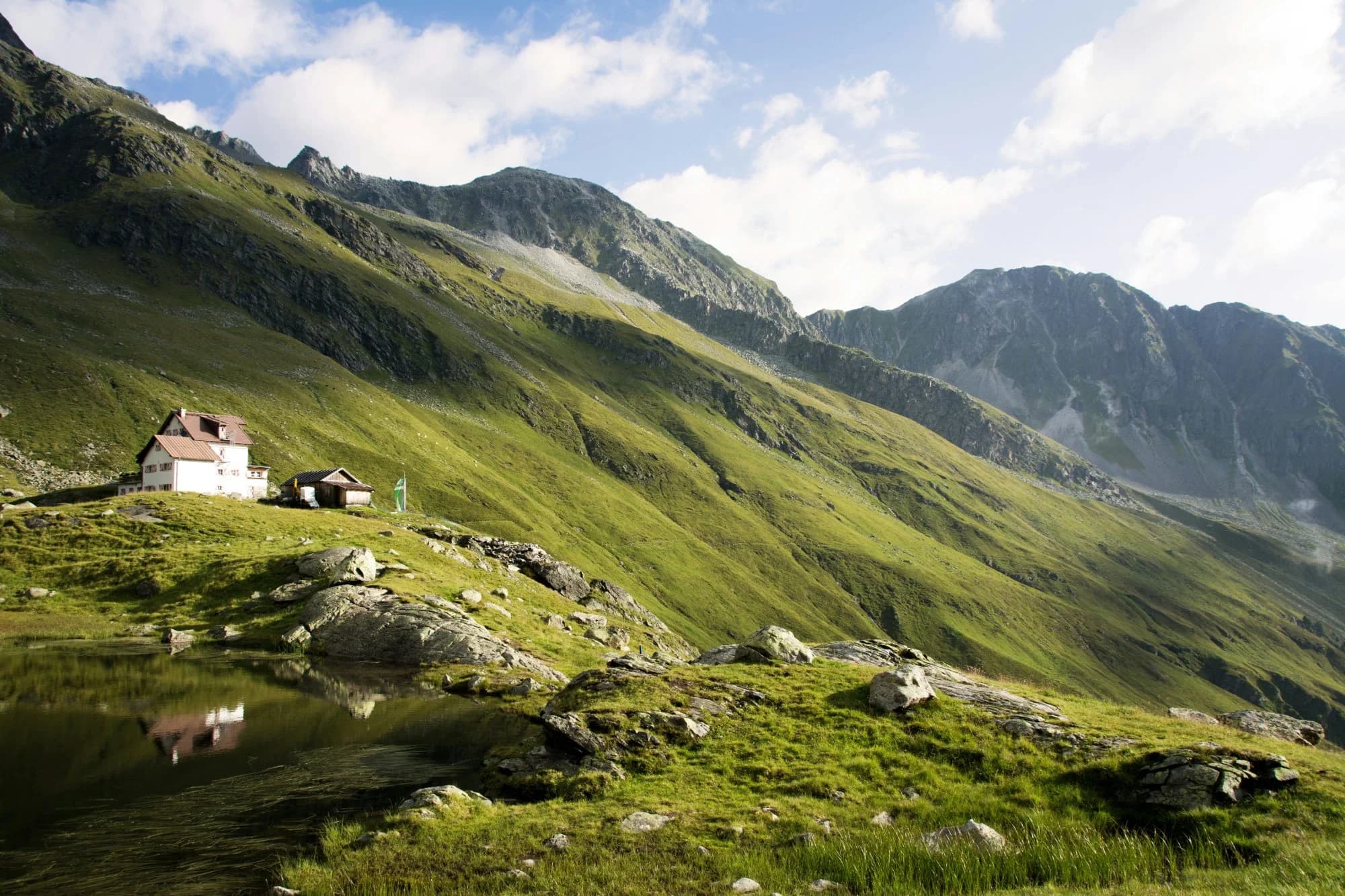
Kitzbühel functions as Austria's most internationally legible alpine address. The town is compact, medieval in its original street plan, and surrounded by one of Europe's most technically varied ski areas. Suites in this region are typically contained within chalet-format or converted farmhouse structures, with materials weighted toward local spruce, stone, and handworked textiles. The architectural language is vernacular but the execution at the top end is precise and considered. Summer in Kitzbühel, increasingly, rivals winter for occupancy among the clientele that uses these properties for cycling, hiking, and the annual tennis tournament circuit.
Salzburg's Altstadt
Salzburg operates at a more compressed scale than Vienna. The Baroque old town, also a UNESCO World Heritage Site, sits between the Salzach river and the Festungsberg hill, and its geometry is largely fixed. Properties of consequence here occupy Baroque palaces or cliff-adjacent buildings with views toward the Hohensalzburg Fortress. The Mozart association draws a consistent international audience, amplified significantly during the Salzburg Festival in July and August, which remains one of the world's highest-density classical music events in terms of programme and attendance.
The Salzkammergut Lake District
The lake district east of Salzburg, centred on towns such as Bad Ischl, Hallstatt, and St. Wolfgang, represents a more private register of Austrian luxury. Properties here are typically smaller, owner-managed, and embedded in lakeside or hillside positions that prioritise silence and landscape access over urban convenience. This region was the preferred summer retreat of the Habsburg court, and that history leaves a discernible imprint on the local sense of appropriate hospitality.
When to Visit Austria for a Suite Experience
Austria is a genuinely year-round destination, but the character of each season is sufficiently distinct to inform a choice rather than merely a preference.
Winter, from December through March, is the operative season for alpine properties. Ski resorts at Kitzbühel, Lech, Zell am See, and Arlberg reach full operational capacity, and suite availability in these areas tightens significantly from late December onward. The Hahnenkamm downhill race weekend in Kitzbühel, held in January, constitutes one of the most compressed luxury demand events on the alpine calendar; suites within walking distance of the race course are effectively unreachable without advance planning measured in months, not weeks.
Spring, particularly April and May, is the considered traveller's window for Vienna. Occupancy is lower, gardens at Schönbrunn and the Prater are in early season, and the cultural calendar — opera, philharmonic, theatre — continues without interruption. Rates are measurably more accessible than in high summer or Christmas markets season.
Summer brings the Salzburg Festival, running from late July through August, which elevates Salzburg accommodation pricing to its annual peak. Vienna in summer is warm and culturally active, though the Vienna Philharmonic's primary season concludes in June. The Salzkammergut lake district is at its most accessible and most populated in July and August.
Autumn, from September through October, is arguably the most underrated period. Alpine colours, quieter roads, the opening of Vienna's opera season in September, and reduced competition for suite inventory combine to make this a high-value travel window for those who understand the calendar.
Austrian Luxury Standards: What Designates a Top-Tier Property
Austria does not operate a nationally recognised prestige label equivalent to France's Palace designation. The Austrian hotel classification system is administered by the Austrian Hotel and Tourism Association (ÖHV) and the Austrian Federal Economic Chamber, using a standard star scale from one to five. Five-star Superior is the effective ceiling, applied to properties that exceed the baseline five-star criteria.
In practice, the meaningful differentiators at the top of the Austrian market are membership in international consortia — Leading Hotels of the World, Relais & Châteaux, and The Luxury Collection among them — and ownership lineage. Several of Austria's most significant properties remain in family ownership after multiple generations, a fact that carries operational consequence: investment decisions are made by people with long time horizons, not quarterly reporting cycles. The physical results — maintained original architecture, trained in-house staff, kitchens with genuine culinary identity — are perceptible to guests who have experience across comparable international properties.
The Viennese grand hotel tradition specifically produces a typology that has no direct equivalent elsewhere: properties built specifically as hotels in the imperial period, staffed continuously since opening, with institutional memory embedded in service protocols. This is a different category from a converted palace or a design hotel occupying a former industrial building.
How to Choose the Right Suite in Austria
Several practical axes of decision apply specifically to the Austrian market.
For Vienna, floor matters architecturally. The Beletage — the first floor above ground level — in a Ringstrasse property was historically the prestige floor, designed for state-level reception rooms. Suites on this level tend to have the highest ceilings and the most elaborate decorative programmes. Upper floors in the same buildings often offer better light and reduced street noise, a consideration on the Ringstrasse itself where tram traffic is continuous.
For alpine properties, aspect is the primary spatial variable. South-facing exposures maximise daylight and mountain views; north-facing rooms may offer superior valley or village views depending on the specific topography. Request a site plan from the property and verify orientation before confirming.
Ski-in, ski-out access is a phrase used loosely across alpine marketing. In practice, direct boot-room access to a prepared piste of appropriate gradient is present at a minority of properties; many use a shuttle or short walk. Confirm the physical connection precisely if this factor is material to your use of the property.
For Salzburg during Festival season, the relationship between the suite's location and the primary festival venues — the Grosses Festspielhaus and the Felsenreitschule — is worth mapping before booking. Late evening performances end after public transport frequency drops, and the proximity of your accommodation to the exit can materially affect the experience of the evening.
The Value of a Curated Selection in Austria
Austria's hotel inventory at the five-star level is extensive relative to the country's geographic scale. Vienna alone lists dozens of properties claiming top-tier positioning. The surface signals — star ratings, marketing copy, photography — are calibrated by marketing departments and are not reliable instruments of differentiation for guests operating at the level where the choice between a junior suite and a grand suite represents a meaningful financial and experiential commitment.
A curated selection performs a specific function: it applies consistent criteria across properties that cannot self-report objectively. The criteria that matter at this level are not amenities checklists but spatial quality, service continuity, material honesty, and the degree to which a property's character holds under extended occupation rather than a single-night stay. La Suite's selection of 33 properties across Austria reflects the application of those criteria to a market where the gap between the presented and the actual can be considerable.
Frequently Asked Questions About Hotel Suites in Austria
What is the best area in Vienna to stay in a luxury suite?
The First District, specifically along or adjacent to the Ringstrasse, contains the highest concentration of architecturally significant luxury properties. For guests prioritising proximity to the Opera and major museums, this remains the primary address.
Is Kitzbühel or Lech better for a luxury alpine suite?
Both offer genuine top-tier properties, but the character differs. Kitzbühel has a more accessible town centre with retail, dining, and a medieval street plan. Lech is smaller, more contained, and carries a longer association with discreet high-net-worth European clientele. The choice depends on whether the town itself or the mountain experience is the primary draw.
When should I book a suite in Salzburg during the Festival?
Demand for suite inventory during the Salzburg Festival concentrates heavily in July and August. Properties with direct access to the Altstadt are typically fully committed six to twelve months in advance for peak Festival weekends. Enquiring in autumn for the following summer is not excessive.