


Canada
The Best Hotel Suites in Canada
Canada's luxury hotel geography is concentrated in six metropolitan areas and several destination resort zones. Understanding where a property sits within its city determines the nature of the stay entirely.
Best Neighbourhoods for Hotel Suites in Canada
Downtown Toronto: The Financial and Cultural Axis
Toronto's core, bounded by Bloor Street to the north and the waterfront to the south, contains the highest concentration of internationally branded luxury properties in Canada. The Yorkville district—occupying the blocks around Bloor and Bay—functions as the city's luxury retail and hospitality quarter. Properties here offer immediate access to the Royal Ontario Museum, high-end retail, and the gallery district. The Financial District, further south, attracts a different profile: corporate travellers and those attending events at the Roy Thomson Hall or Meridian Hall. Suites in this corridor tend toward the architectural and the boardroom-adjacent.
Montreal: Mile End, Golden Square Mile, and Old Montreal
Montreal's luxury hospitality divides cleanly between two urban registers. Old Montreal—the cobblestone district anchored by the Basilique Notre-Dame and the Old Port—offers heritage buildings converted into boutique hotels with exceptional suite product. The Golden Square Mile, historically the domain of Montreal's Anglo-merchant class, retains its architectural grandeur and houses several of the city's most established grand hotels. The neighbourhood's proximity to the Montreal Museum of Fine Arts and Sherbrooke Street's gallery row gives it a cultural density that is difficult to replicate elsewhere in Canada.
Vancouver: Coal Harbour and the West End
Vancouver's premium hotel geography clusters along the waterfront from Canada Place west through Coal Harbour. Properties in this corridor offer direct sightlines to Burrard Inlet, the North Shore mountains, and Stanley Park—a trifecta of natural reference that distinguishes Vancouver suites from those in any comparable North American city. The West End, immediately adjacent, provides walkable access to the Seawall and Denman Street's restaurant concentration. Yaletown, to the south, offers a more residential sensibility with converted warehouse buildings housing design-forward properties.
Quebec City: Old Town and the Upper City
Quebec City's hospitality landscape is defined by its UNESCO-listed fortified walls. The Upper City—Haute-Ville—concentrates the most prestigious addresses, with the Château Frontenac as the architectural anchor of the entire district. Suites within the Old City walls carry an urban archaeology that is unique in North America: the physical fabric of 17th and 18th century French colonial architecture surrounds properties that meet contemporary luxury standards. The Lower City—Basse-Ville—offers a more intimate scale in the Petit-Champlain quarter.
Banff and the Rocky Mountain Corridor
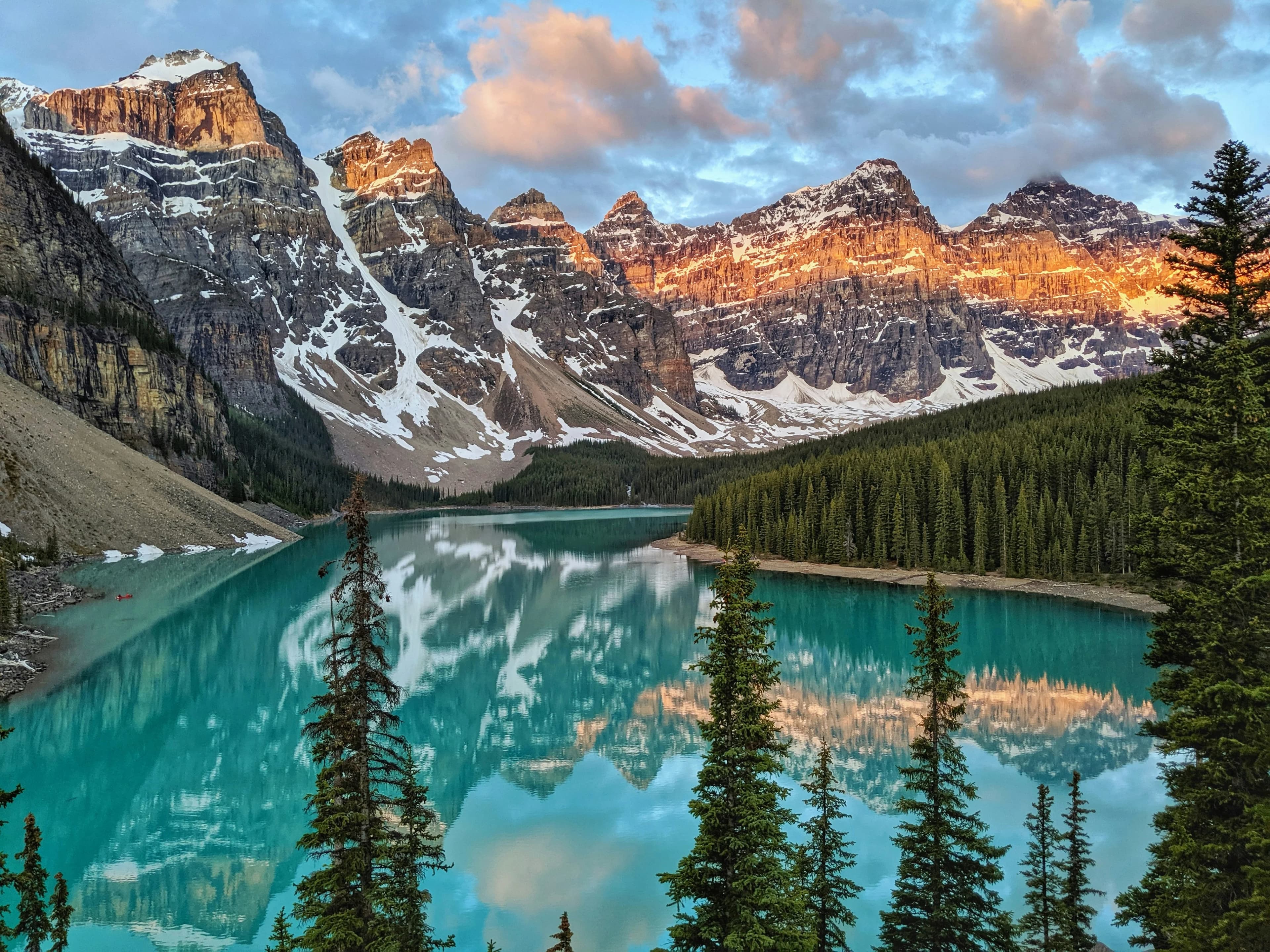
The Rocky Mountain resort zone—spanning Banff, Lake Louise, and Jasper within their respective national parks—operates under entirely different spatial logic. Here, the suite's relationship to landscape is the primary design consideration. Properties are set within protected park boundaries, which constrains development and concentrates quality. Banff townsite contains several significant hotel addresses; Lake Louise, 57 kilometres northwest, offers a more isolated and scenically extreme setting. Access is exclusively by road or rail, which filters the clientele toward those who have deliberately chosen the destination.
Ottawa: Centretown and the ByWard Market
Ottawa's luxury hotel offer is more concentrated than its reputation suggests. The Centretown district, within walking distance of Parliament Hill and the National Gallery of Canada, houses the capital's most established addresses. The ByWard Market district, to the northeast of the Hill, offers proximity to independent restaurants and a slightly less formal atmosphere. For international visitors attending diplomatic or government-adjacent events, the concentration of embassies and federal institutions in Ottawa's core makes location selection more consequential than in a purely leisure context.
When to Visit Canada for a Luxury Suite Stay
Canada's climate varies so dramatically across its geography that seasonal advice must be destination-specific. The country does not have a single optimal travel window.
For urban Canada—Toronto, Montreal, Ottawa—the late spring to early autumn window (May through September) offers the most reliable outdoor conditions. Montreal's Festival International de Jazz, held annually in late June and early July, represents the city's highest-profile cultural event and drives significant hotel occupancy across all tiers. Toronto's international film festival (TIFF), held in September, is the most consequential annual event in the city's hospitality calendar: suite inventory at premium properties contracts sharply during the ten-day festival period, and rates reflect demand accordingly.
For mountain Canada, the calculus reverses. Winter—specifically December through March—is the primary season for ski-adjacent stays in Banff and Lake Louise. The combination of reliable snowpack, frozen lake surfaces, and the particular quality of winter light in the Rockies creates a visual and experiential context that summer cannot replicate. Summer in the Rockies (July and August) brings crowds and fully booked properties; shoulder seasons (May-June and September-October) offer the best combination of accessibility and reduced occupancy.
Quebec City's Winter Carnival, held in February, is one of North America's most distinctive cold-weather events and places considerable pressure on Old City hotel inventory. Advance booking of three to six months is standard for premium suite categories during this period.
For Vancouver, the mild maritime climate makes year-round visits viable. The city rarely sees significant snowfall at sea level, and summer temperatures are moderate rather than extreme. The Pacific Northwest shoulder seasons—April-May and September-October—offer favourable conditions with somewhat reduced visitor volumes compared to the peak July-August window.
Local Luxury Standards: How Canada Classifies Its Hotels
Canada does not operate a nationally standardised hotel classification system equivalent to France's Palace designation or the UK's AA star rating. The Canada Select program, administered provincially, provides a quality-rating framework, but its criteria do not map precisely onto international luxury standards. In practice, the relevant quality signals for high-end travellers come from international brand affiliation and independent recognition rather than domestic classification.
The most reliable quality signals in the Canadian luxury market include membership in Leading Hotels of the World, Relais & Châteaux affiliation (particularly relevant for boutique and lodge properties), Forbes Travel Guide star ratings, and AAA Diamond designations. The latter—specifically the AAA Five Diamond designation—is the most widely recognised domestic benchmark for hotel quality in North America and is applied with rigour.
Several Canadian properties carry historic architectural designations that function as informal prestige markers. National Historic Site of Canada designation, held by properties including the Fairmont Château Frontenac and the Fairmont Banff Springs, signals a level of architectural and cultural significance that informs the suite experience. These buildings are not merely heritage in name; they are subject to conservation requirements that shape physical renovations and material choices throughout the property.
How to Choose the Best Hotel Suite in Canada
Suite selection in Canada requires matching the property's orientation to the traveller's primary objective. Several practical considerations apply across all destinations.
For suites with landscape views—mountain-facing rooms in Banff, ocean-facing rooms in Vancouver, river-facing rooms in Quebec City—the specific floor level and compass orientation are material factors. In mountain properties, the difference between a courtyard suite and a Rockies-facing suite is not a matter of preference; it is the core reason to select the property. Confirm orientation and floor level directly with the property before confirming a reservation.
Suite sizing in Canadian hotels spans a wide range. The country's top-tier suites—presidential and penthouse categories—frequently exceed 100 square metres in cities and can reach 300 square metres in resort contexts. Entry-level suite categories, often marketed as junior suites, may offer only marginal additional space over a premium king room. The distinction matters for any stay intended for extended in-room time, entertaining, or multi-person occupancy.
Service architecture—the ratio of staff to guests, the availability of in-suite dining at all hours, the presence of a dedicated butler or floor concierge—varies significantly between urban business hotels and resort properties. Mountain lodge properties frequently offer a more integrated service model, where a single point of contact manages the full stay itinerary. Urban properties tend toward departmentalised service. Neither model is inherently superior; the appropriate choice depends on the nature of the visit.
For Quebec City properties within the Old City walls, be aware that heritage building constraints can affect in-suite amenities. Some properties in converted historic buildings have physical limitations on bathroom sizing, ceiling height, or acoustic separation that would not be present in purpose-built luxury towers. These limitations are not deficiencies; they are the price of occupying genuinely historic fabric. They should be understood in advance.
The Value of Curation: Why a Curated Selection Matters in Canada
Canada's hotel market at the luxury tier is large enough to be genuinely confusing. The country has forty significant properties in La Suite's selection alone, distributed across six major urban markets and multiple resort zones. Without a curatorial framework, the decision process defaults to brand familiarity or pricing signals—neither of which reliably identifies the best suite product for a specific traveller's requirements.
The curation value is most acute at the intersection of heritage and contemporary standards. Canada has a number of historic hotel properties whose reputations were established in an earlier era and whose current suite product may or may not justify the brand premium. It also has a set of newer properties—particularly in Toronto and Vancouver—where suite quality genuinely exceeds what the brand's international profile would suggest. A curated selection that has physically assessed suite categories across all forty properties provides a more reliable guide than review aggregators, which weight volume over quality discrimination.
La Suite's selection covers the full geographic range of Canada's luxury suite offer, from the urban to the wilderness-adjacent, and provides the basis for a decision that accounts for the traveller's specific criteria: landscape orientation, service model, architectural character, and proximity to cultural or natural programme.
Frequently Asked Questions: Hotel Suites in Canada
What is the best city in Canada for luxury hotel suites?
Toronto and Montreal offer the highest concentration of internationally recognised luxury properties. Vancouver distinguishes itself through landscape-integrated suite product. Quebec City provides an irreplaceable historic urban context. The best city depends entirely on the traveller's primary objective.
Are Canadian luxury hotels competitive with European standards?
At the top tier, several Canadian properties—particularly in the Fairmont portfolio's historic assets and the leading independent mountain lodges—meet European grand hotel standards in service depth and physical quality. Urban Canadian luxury generally competes with comparable US properties rather than European palace hotels.